| |||||||||||||||||||||||||||||
Showing posts with label COVID-19 pandemic. Show all posts
Showing posts with label COVID-19 pandemic. Show all posts
Friday, April 29, 2022
Montreat Community Events Covid-19 Update


Sunday, February 20, 2022
A church changed by COVID - The cost of connecting in new ways
By Sue Washburn | Presbyterians Today
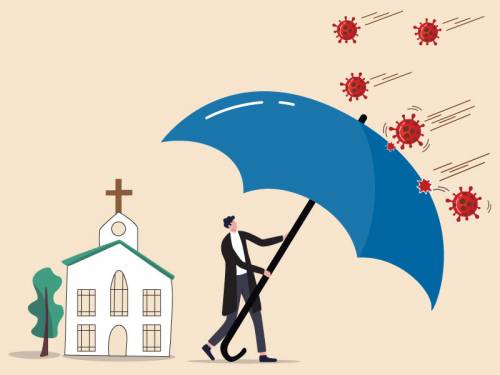 It’s been two years since COVID-19 entered our lives. During that time, our world has changed — and with it the church — as ideas of what church is have been reshaped by livestreaming worship and Zoom meetings and Bible studies. With COVID and its variants still factoring into everyday decisions and plans, congregations are just now beginning to understand the long-term impact the virus will have on not only a church’s mission, but also on its infrastructure. What kind of technology and staffing will be needed as churches move forward? Should pastors, many of whom figured out how to get online with a phone, be expected to continue with those responsibilities indefinitely? Or does the church staff need to change for a post-COVID world?
The Rev. Christy Ramsey, stated clerk and general presbyter of the Presbytery of Nevada, has been an advocate of media in ministry for decades. He says each church did what it could to keep people connected to God and to each other in the throes of the crisis, but now comes the more complicated question: What next? What are realistic expectations in terms of sustainability as the added responsibility of technology brings with it additional costs and job responsibilities?
“Some churches had lots of money and staff and could get online with all of the bells and whistles,” he said. Other congregations repurposed the equipment they already had. He vividly remembers the day he went to one small church. “The internet didn’t work because it hadn’t been used for a year and a half, but once that was running, they got an old TV and put it up on chairs so that the tiny congregation could sing to YouTube videos,” said Ramsey.
Another church in the presbytery mailed out the weekly sermon via the Postal Service and asked people to read it on Sunday at exactly 10 a.m. to create a unified time of worship. The big questions, though, Ramsey points out, aren’t necessarily about technology. They are about connection and what tools will be needed for that connection — and, at what cost.
Change is here to stay
While many churches were creative with outreach during the pandemic, the challenge now is to incorporate the changes into common practice. Do congregations have enough volunteer support to continue livestreaming? Is there financial support for equipment upgrades? Will churches change the staffing requirements as music directors need to research which hymns or anthems the livestreaming license covers? And then there’s the big question: Does the pastor need to be technologically savvy in addition to being theologically trained?
The Rev. Dr. Joseph Scrivner, pastor of Brown Memorial Presbyterian Church in Tuscaloosa, Alabama, first went online from his home when the pandemic started.
“I’ve jokingly said, ‘I’m the chair of the audio visual committee,’” said Scrivner. The one-person committee started when he picked up an iPad at home.
While Scrivner took responsibility for recording his sermons, the church officers stepped up their engagement with pastoral care. “Their resiliency has been a blessing, and the members modeled mutual pastoral care for one another,” he said.
The Rev. Jessica Crane-Munoz, pastor of Sunrise Presbyterian Church in Great Falls, Montana, took a new call during COVID, inheriting a volunteer who sets up the livestreaming weekly.
At her former church, she prayed weekly that a volunteer from the church would show up and learn how to push the buttons. The congregation now has a regular volunteer to get the church online every Sunday. However, she worried about the day when the volunteer was sick or not available since no one else knew the necessary steps for livestreaming.
All hands on deck
Both getting and staying online require an “all hands on deck” approach. Not all pastors have the skills of Scrivner and Crane-Munoz, and some congregations rely solely on volunteers to get them online. Many congregations are still not able to get online because of the steep learning curve and the lack of internet or reliable cell service.
As solo pastors, Scrivner and Crane-Munoz were both good with technology and able to lead the move to online. For both, there’s been give-and-take between the expectations of the pastors and volunteers. But in the suburbs of Philadelphia, Elkins Park Presbyterian Church decided to go a different path even before COVID.

Elkins Park Presbyterian Church hired a media contractor to help with its digital ministry, even though the pastor is tech-savvy. Courtesy of Elkins Park Presbyterian Church
As part of its strategy to become a vital congregation, the church decided it needed to be present in the digital community and committed to hiring a media contractor.
Before the pandemic, Elkins Park paid an offsite media contractor to manage its church website and social media accounts and to make slideshows and videos of church events to share online. Pre-COVID, the media contractor did not attend worship. However, since COVID, the job has changed to onsite, adhering to the necessary precautions to keep everyone safe.
“We feel it’s important to use technology to do that. I don’t see how a church can survive today without a strong media presence,” said Karen Sheehan, an elder at Elkins Park.
Neither does she think that technical responsibilities should fall to a pastor.
“Every church should look into hiring someone who has media skills to take the burden off the pastor,” Sheehan said, “even if the pastor has the skills.”
Danielle Mink, the technical and communications director at Unity Community Church in Pittsburgh, started as a part-time hire in 2002 when she was in eighth grade. Today she is full-time with benefits. “The challenge now is creating meaningful connection for the people who are only online,” Mink said.
“Churches that have hired someone to do media discover that they can always find more for that person to do,” said the Rev. Derek Campbell of Unity.
When it comes to tech job descriptions, there is no one-size-fits-all for churches. Media and tech jobs can range from five hours a week to full-time with benefits. Responsibilities for media personnel can include website maintenance, social media posting, video production and livestreaming as well as creating slides for worship, maintaining equipment and licenses, and scheduling volunteers. Compensation generally begins at $10 an hour for the smallest congregations. But whatever the details might be, one must be in all tech job descriptions: A church’s digital media message must complement its mission and should not feel like a corporate media post. Second Presbyterian Church in Nashville, Tennessee, is reworking its associate pastor job description to include media proficiency so that the media are infused with spirituality.
“We want to be sure the technology creates a worshipful experience,” said the Rev. Dr. Mary Louise McCullough. Fusing technology and faith to create a powerful online worship experience requires both technical and theological knowledge.
Online worship benefits
The benefit of online worship is it allows members to participate in what Ramsey calls “the church of their heart.” For some, the church of their heart is the congregation they attended during their youth, before they moved away or became homebound in old age. “Online worship has also been a great way to reach our shut-in members,” said Scrivner. But he says young people like online worship because it allows them to find a congregation that shares their values. “Our understanding of what it means to be a member is changing,” he said.
What isn’t changing is the realization that “there is no going back to just in-person worship,” said McCullough. While volunteers and staff scrambled to get the church online, the current task is to discern what is sustainable and remain flexible in planning for whatever God has next.
Sue Washburn is an interim pastor near Pittsburgh.
Hiring Thoughts for the Future
One of the impacts of COVID has been the “great resignation,” as those in professions from ministry to teaching reevaluate their calling in life. Vacated church positions present an opportunity for staffing structures to be reimagined. Salary line items could be reallocated to make room for a part-time tech guru.
Many churches are looking carefully at budgets and seeing where money can be found to accommodate the new skills and responsibilities needed for ministry today. So, whether it’s a new pastor, administrator or musician who needs to be hired, think creatively and identify the skills needed to move the mission of the church forward. Here are some things to think about when hiring.
Church administrators. Timely, responsive communication with parishioners requires more than paper and a copier. Video channels, texting and social media are common ways of connecting with people. Administrative assistants should be proficient in these communication tools, too.
Musicians. Livestreaming music means keeping licenses up to date, checking copyrights and accurately reporting what music gets played over the internet.
Pastors. While it’s debatable how much technology expertise should be in a pastor’s job description, the flexibility to provide leadership and pastoral care by phone, text or in person is imperative for a multigenerational church. The size and resources of a church will determine whether volunteers or staff maintain the online presence.
—Sue Washburn and Donna Frischknecht Jackson
Wednesday, July 21, 2021
Jesus is still in the midst of us - Stated Clerk tells Georgia congregation to have faith as pandemic continues
LOUISVILLE

The Rev. Dr. J. Herbert Nelson, II, Stated Clerk of the General Assembly of the Presbyterian Church (U.S.A.), records a sermon for Oakhurst Presbyterian Church in Decatur, Georgia, at the Presbyterian Center's chapel in Louisville. Photo by Randy Hobson.
“Do not be conformed to this world, but be transformed by the renewing of your minds, so that you may discern what is the will of God.” — excerpt from Romans 12:1–3
More than 16 months after the COVID-19 pandemic tightened its grasp on the world, the Stated Clerk of the General Assembly of the Presbyterian Church (U.S.A.) is urging churches not to lose hope. The Rev. Dr. J. Herbert Nelson, II preached virtually to Oakhurst Presbyterian Church in Decatur, Georgia, last week.
Nelson told the church that the presence of the Lord reminds Christians that they are not alone in times like these.
“The writer of Romans says mimicking God is not bad. Mimicking the one who gives us health, strength and life is not bad. The one who walks with us every hour and shows us the way because we cannot find for ourselves is not bad,” said Nelson. “Actually, it is a will that we should have driving through our spirit and soul in times like these.”
Even though vaccinations have brought a reopening across the country, the new variants of the virus have caused an uptick in the infection rate for those who have not been vaccinated. Nelson says people need to continue to lean on Christ in these times.
“I do believe this is a test and a challenge in so many ways in our personal lives because they are so busy and clouded with things that have to be done right now at this moment. We created a world like that,” he said. “And yet, we see now, not the crumbling of people’s lives and pain of losing loved ones, but the transformation of institutions that have to rethink their purpose and care for their workers. Institutions that have to stop for a moment and give homage to one that is greater than what their empire represents in these current days.”
Nelson told the congregation that God has not abandoned the world.
“Could God be saying something, not bringing on the pandemic, but by being in our presence while we deal with it?” Nelson asked. “That’s the way God always acts, through the moments when we are most vulnerable, when we have lost our way, when we are crying and struggling over how we are going to get through it. That’s when God gets our attention.”
Nelson says challenges with COVID-19 still remain.
“Some people have not been vaccinated and yet there are those in denial mode that this is even a reality. But there is something we are called to do in faith,” he said. “A calling to be what God wants us to be in these moments, to be sane and sober with regards to our actions and understanding of who God is, to not test God in these moments.”
The Stated Clerk added that this could be a “God moment” for people to go deeper in faith and understanding of what it means to be part of humanity and to love their neighbors.
“Maybe it’s time to break down barriers of racial injustice and invite all to be a part of it. Maybe it’s time to think what new reality looks like and to fully engage the cultural realities of our time when we see the rich getting richer and the poor getting poorer,” said Nelson. “Maybe it’s time to think fully about what it means to give some of what we have to others rather than holding onto it.”
Nelson acknowledges that churches are anxious to get back to routine and in-person worship. But he adds that Christians need to listen to what God wants from the church moving forward.
“I think God is calling us to adjust to what it really means to be human, to love, to care for our neighbors and reground ourselves to the root of the gospel. This is time to think through and calibrate what future ministry looks like in days to come,” he said. “Some predict we will have variances of this virus indefinitely. We don’t know what the future holds, but we’ve never known what the future holds.”
Nelson told the Oakhurst congregation that it’s time to “recalibrate and pull out a new message of faith and hope.”
Wednesday, July 29, 2020
REGISTER TODAY: COVID-19 and Challenges in the Orthodox Church
| |||||||||||||||
|


Friday, July 24, 2020
Zoom: The Science of COVID 19--An Update on Transmission & Vaccine Development
 In last Wednesday’s Presbytery-wide Zoom gathering about re-opening church buildings, participants agreed that there is a lot we still don’t understand about how the coronavirus is spread and the most effective ways for congregations to keep it in check. As a result, a follow-up Zoom call has been organized to allow an online conversation with scientists who can provide current information and guidance in making important decisions. This call will take place next Thursday, July 30, from 12 noon to 1pm. The Zoom invitation is below. We will record the call, so you can watch and/or share it later, if necessary.
Our experts:
Dr. Rich Hjorth is a retired virologist with 35 years of experience in the pharmaceutical industry. Rich is a recognized expert in vaccine development and is currently working with InvVax on a coronavirus vaccine. He is a member of First Bethlehem and serves as their Presbytery Commissioner.
Dr. Lisa Allgood is a retired immunologist/neurochemist who now serves as Transitional Executive Presbyter in the Presbytery of Cincinnati. A graduate of the University of Medicine and Dentistry NJ, Lisa spent 36 years as an executive in the pharmaceutical industry.
Rich and Lisa will bring us up to speed on this quirky virus, share where the research is going w/regards to possible treatments/vaccines, as well as help lay a groundwork for those wrestling with re-opening safely.
Lehigh Presbytery is inviting you to a scheduled Zoom meeting.
Topic: Science of COVID-19
Time: Jul 30, 2020 12:00 PM Eastern Time (US and Canada)
Join Zoom Meeting
Meeting ID: 872 9089 5701
888 475 4499 US Toll-free
Rhonda
Rev. Rhonda K Kruse
Transitional Presbytery Leader
Lehigh Presbytery
(610) 391-9020 (office)
(610) 360-8823 (mobile)
Monday, July 20, 2020
PA Governor’s New Mitigation Effort 7/16
 Stated Clerk Frank Lewis has asked that this be sent to the Presbytery pastors and Clerks of Sessions. This email is in response to the PA Governor’s actions re: The Covid-19 Increases in the state, but Skip Noftzger’s words are relevant for us as well as we minister in this Covid-19 time.
I just sent an email urging respect, support and fulfillment of the restrictions. While I do not want to abrogate our polity or session responsibility, I am more than willing to advise, recommend and urge while leaving/affirming their calling in ordered ministry with their congregations. Throughout this season whenever restrictions have loosened or tightened I continue to try and reinforce that:
- While there may be exemptions for churches, viruses do not care about the 1st amendment.
- To engage in Christian community and worship by alternative means for a season does not deny or compromise our identity in Christ.
- To make choices based upon responsibility and care is not to act out of fear. Our lives are in God's hands, but faithful response acts are based in wisdom.
- Our witness as communities of faith in our towns should not flaunt some disregard for the restrictions imposed upon others just so we can continue our gatherings.
Thursday, June 4, 2020
WCC NEWS: World Council of Churches postpones its assembly in order to be more inclusive of the wider fellowship amid COVID-19
 The executive committee, on behalf of the central committee of the World Council of Churches (WCC), has decided, in close consultation with the Evangelical Church in Germany (EKD) and other host churches and local partners, to postpone the 11th assembly, originally planned for September 2021 in Karlsruhe, Germany, until 2022.
The decision, announced on 3 June, was made because of the gravity and uncertainties related to the COVID-19 pandemic. It is hoped that an assembly in 2022 will provide a better opportunity to secure the full participation of the ecumenical fellowship. The location in Karlsruhe will remain the same.
The EKD, Evangelical Church in Baden, Council of Churches in Germany, and other churches of various confessions in Germany, France, and Switzerland jointly invited the assembly to Karlsruhe, in a European region located between the borders of the three countries. They have reaffirmed their invitation for 2022, which has been warmly accepted by the WCC.
The assembly will bring together 800 official delegates from the WCC’s 350 member churches, and many other participants and visitors, all of whom will gather in prayer, and celebrate their fellowship under the theme “Christ’s love moves the world to reconciliation and unity.”
The assembly theme will be reflected upon in the light of the dramatic global situation caused by the COVID-19 pandemic. The pandemic will also have a significant impact on assembly planning in terms of programme, logistics, and finances.
New dates for the assembly in the second half of 2022 are currently being discussed and will be decided upon together with the Karlsruhe exhibition centre, Messe Karlsruhe. The plans, which are already well advanced, will be revised and restructured for 2022.
A WCC assembly normally take place once every eight years and is the highest decision-making body of the WCC. It has the task of determining the overall policies of the WCC and electing the WCC central committee, the main governing body between assemblies.
The WCC moderator Dr Agnes Abuom said, “We hope that, by 2022, we will have more certainty and knowledge about the effects of the COVID-19 pandemic, and we hope that waiting to convene the assembly will mean fuller participation by all who want to walk, work, and pray together. This was a very difficult decision to make but we trust that it will be offset by the joy we will feel about being able to gather, together at last, in 2022.”
Metropolitan Prof. Dr Gennadios of Sassima, vice-moderator of the WCC and moderator of the WCC Assembly Planning Committee said that the priority of the WCC is the safety, inclusivity and love of the fellowship as a whole. “We make this decision with the feeling of care and love and dignity of the one human family. May God help us reach the assurance of safety and equality that we need to hold an assembly that is able to welcome all with joy and love.”
Emphasizing the opportunity that postponing the assembly opens for churches, vice-moderator Bishop Mary Ann Swenson said, "I believe that working, walking and praying together in the midst of COVID-19 will enable our fellowship, our staff, and all our churches to more deeply appreciate and incarnate in our lives and work the very theme we have chosen for the assembly itself: ‘Christ’s love moves the world to reconciliation and unity.’ "
Bishop Prof. Dr Heinrich Bedford-Strohm, chair of the EKD Council, said "Karlsruhe remains in many ways an ideal place for a cross-border ecumenical assembly with a European dimension. He reiterated that “the most important reason why we are inviting the assembly to Europe is that we hope to receive something. Given the challenges we will have to face in the coming years, this major ecumenical event can be a visible sign of one world in solidarity, peace, and justice.”
Bishop Prof. Dr Jochen Cornelius-Bundschuh of the Evangelical Church in Baden said he is looking forward to using the time gained to work with all the churches in the region. ”Let us continue to move and be inspired by the wonderful theme.”
Dr Frank Mentrup, Mayor of the city of Karlsruhe, said the invitation to the WCC would of course also be valid for 2022. "The whole of the city is very happy to welcome church representatives from all over the world here in Karlsruhe - here in the heart of Europe, in a region steeped in history, where neighbours have long since become close friends, where we and our partners on this side and across the Rhine, across borders, in Baden, the Palatinate, in Alsace and also in Switzerland, working together and amicably connected to a future worth living,” he said. “The structures created form a strong basis for the upcoming challenges and for the success of the WCC assembly in Karlsruhe - also in 2022."
Rev. Prof. Dr Ioan Sauca, interim general secretary of the World Council of Churches underlined: "So much creative thought and hard work have already gone into preparations for our next assembly. I am grateful to all who have contributed thus far; and I am confident that, with our continued collaboration, the support of the churches, and God's continued blessings, our 11th Assembly will even more deeply contribute to the life, witness, and spirituality of Christians everywhere."
For further questions and interview requests to the WCC, you are most welcome to contact:
Marianne Ejdersten,
WCC Director of Communication, mej@wcc-coe.org, +41 79 507 6363.
or:
Claus Grue,
WCC Communication Consultant and Media Coordinator, clg@wcc-coe.org, +46 70 611 0977.
For further questions and interview requests to the EKD, you are most welcome to contact:
Pressestelle der Evangelischen Kirche in Deutschland (EKD)
Carsten Splitt
Herrenhäuser Str. 12
30419 Hannover
T. +49(511) 2796-264/268
F. +49(511) 2796-777
pressestelle@ekd.de
www.ekd.de
WCC Executive Committee to hold virtual meeting, pray for world burdened by COVID-19 - WCC news release 30 May 2020
The World Council of Churches promotes Christian unity in faith, witness and service for a just and peaceful world. An ecumenical fellowship of churches founded in 1948, today the WCC brings together 350 Protestant, Orthodox, Anglican and other churches representing more than 550 million Christians in over 120 countries, and works cooperatively with the Roman Catholic Church. The WCC acting general secretary is Rev. Prof. Dr Ioan Sauca, from the Orthodox Church in Romania.
Media contact: +41 79 507 6363; www.oikoumene.org/press
Our visiting address is:
World Council of Churches
150 route de Ferney
Geneve 2 1211
Switzerland
Subscribe to:
Posts (Atom)