Showing posts with label GETI 2022. Show all posts

Wednesday, September 14, 2022

WCC NEWS: Reflections from GETI underscore friendship coupled with knowledge

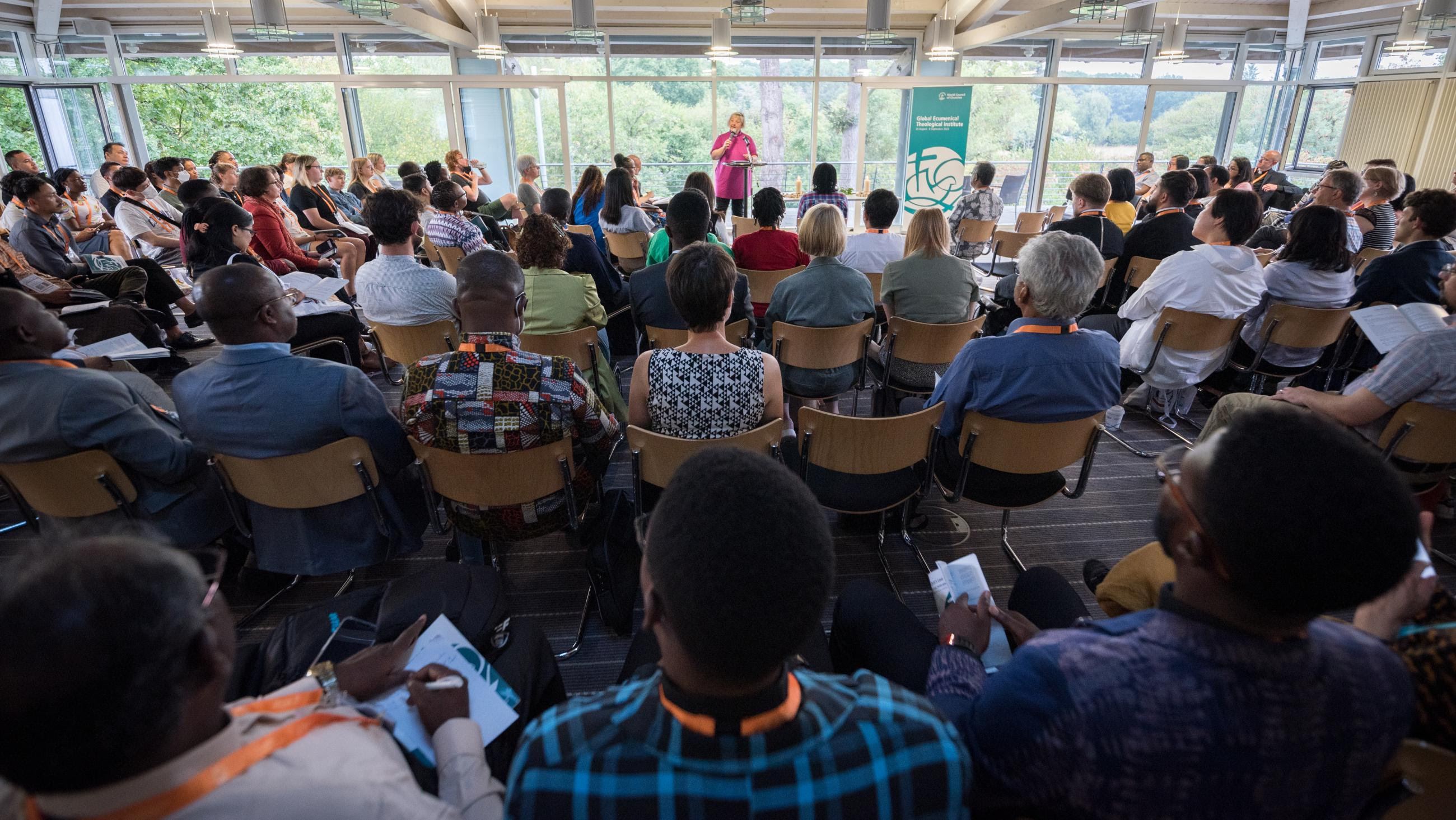
Over 100 people including students, alumni, instructors, and guests from academic and theological institutions in Germany, Switzerland, and France gathered together to hear reflections as part of the Global Ecumenical Theological Institute (GETI) program culmination on 7 September during the World Council of Churches 11th Assembly in Karlsruhe.
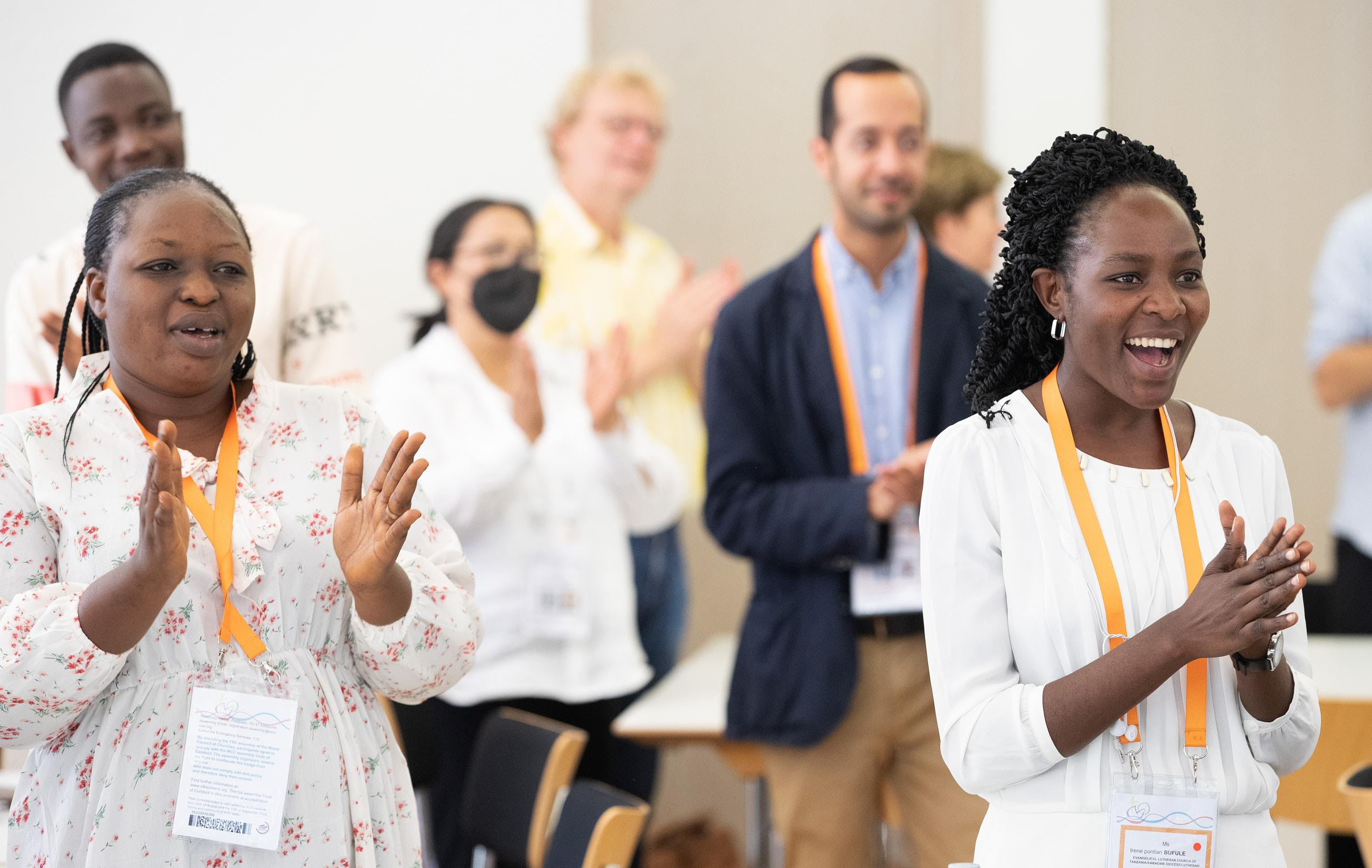
7 September 2022, Karlsruhe, Germany: Participants take part in a warmup exercise during a meeting of the Global Ecumenical Theological Institute at the World Council of Churches' 11th Assembly in Karlsruhe, Germany. Photo: Mike DuBose/WCC
13 September 2022

Rev. Prof. Fundiswa Kobo from South Africa, Dr Sara Gehlin from Sweden, Deivit Montealegre from Argentina, and Pastor Britta Mann from Germany reflected on their experiences with past GETI cohorts in Busan and Tanzania. Rev. Prof. Dr Rudolf von Sinner and Rev. Prof. Dr Septemmy Lakawa gave lectures followed by breakout groups.

The program was moderated by Prof. Dr Esther Mombo.

“I got to experience the depth of the movement”

Dr Sara Gehlin was a doctoral student studying peace-building in the ecumenical movement when she enrolled in the GETI program in 2013. “When I came to Busan, being there made me understand much more deeply what I was working with,” she said.

Gehlin has since completed her studies and now teaches at University College Stockholm in Sweden. She has started a network for teachers in ecumenism in Nordic countries in which they discuss teaching and research, audit one another’s courses, and dream up resources they can create together for students of ecumenism.

According to Gehlin, “When you do not engage with the traditions of others in our education of theology, you focus very narrowly on your own tradition which can lead to fears,” adding that ecumenical education brings “about understanding, friendship and knowledge of each other.”

“We as emerging theologians have a voice that needs to be trained”

“We as emerging theologians have a voice that needs to be trained,” said Deivit Montealegre from the Canadian Council of Churches. Monealegre participated in the Busan GETI program in 2013 and has worked in the ecumenical education world since. 

“GETI taught me to not quickly answer, just wait until teachers and students really struggle with the idea,” he said.

Montealegre is now pursuing a doctoral degree in theology, and said that GETI has also helped him build a network of thousands of people around the world, which is helpful in his pursuits.

“I went to Brazil for struggle, but remained there for love”

During his lecture on the Russia-Ukraine conflict, the Rev. Prof. Dr Rudolf von Sinner shared his own personal connection to Ukraine, having lived in Brazil for over 20 years, and having knowledge of Curitiba, a city in Brazil with a large Ukrainian population.

He began speaking about his own migratory journey leaving his home in Switzerland to moving to Brazil for his work in liberation theology in Brazil, and then meeting his wife. “I went to Brazil for struggle, but remained there for love,” he said. Von Sinner has discovered over his time that Brazil is diverse, accepting refugees and migrants from all over the world, and has more to offer than political struggles.

In the same vein, he spoke a message of love regarding the conflict in Ukraine. “Exclusion of the Russian Orthodox Church is not the solution,” he said. “This would be the real failure of ecumenism.”

Instead von Sinner says of true ecumenism, “We tend to stay together, to move together, to act together with fire in our belly and love in our heart.”

See more
The World Council of Churches on Facebook
The World Council of Churches on Twitter
The World Council of Churches on Instagram
The World Council of Churches on YouTube
World Council of Churches on SoundCloud
The World Council of Churches' website
The World Council of Churches promotes Christian unity in faith, witness and service for a just and peaceful world. An ecumenical fellowship of churches founded in 1948, today the WCC brings together 352 Protestant, Orthodox, Anglican and other churches representing more than 580 million Christians in over 120 countries, and works cooperatively with the Roman Catholic Church. The WCC acting general secretary is Rev. Prof. Dr Ioan Sauca, from the Orthodox Church in Romania. 

Media contact: +41 79 507 6363; www.oikoumene.org/press
Our visiting address is:
World Council of Churches
150 route de Ferney
Geneve 2 1211
Switzerland

WCC NEWS: Christ’s Love (Re)moves Borders – GETI 2022 in images

GETI 2022, the third global iteration of a Global Ecumenical Theological Institute, brought together some 100 young theologians from across the globe for six weeks of intense ecumenical sharing and learning – first online for four weeks and then for two weeks in person onsite – as the World Council of Churches (WCC) recently gathered for its 11th assembly in Karlsruhe, Germany.
Participants at the Global Ecumenical Theological Institute (GETI) build a symbolic wall, to represent the borders that divide people in this world, during the opening celebration of GETI 2022 in Karlsruhe. The participants shared examples of moments in life in which borders were removed and people brought closer together. They built and then dismantled a wall to symbolise that Christ’s love can (re)move borders. Photo: Albin Hillert/WCC
13 September 2022
Following Busan (2013) and Arusha (2018) a Global Ecumenical Theological Institute is organized to nurture young people’s formation and participation at every such major WCC milestone.
Bishop Heike Springhart from the Evangelischen Landeskirche in Baden shares what is for her the first official word of welcome to a WCC assembly-related event in Karlsruhe on 28 August 2022, as she addresses GETI students on the opening day of the programme. Photo: Albin Hillert/WCC
In Karlsruhe, GETI 2022 participants, alumni, facilitators, and guests from a variety of academic and theological institutions worked together to explore the theme of ‘Christ’s Love (re)Moves Borders’, echoing the main theme of the WCC 11th Assembly: “Christ’s love moves the world to reconciliation and unity.”
Students start to get to know each other at the opening of the Global Ecumenical Theological Institute 2022, in Karlsruhe, Germany. Photo: Albin Hillert/WCC

GETI participants unpacked and reflected on the assembly theme through the lens of five thematic areas: Healing Memories; Kairos for Creation; Witness from the Margins; Engaging with Plurality; Body Politics: Body, Health and Healing, 4th Industrial Revolution, & AI and Human Identity in the Context of Global Digitisation.

With youth engagement emphasized as a priority in the worldwide fellowship of churches, GETI 2022 brought the voices of younger and emerging ecumenical theologians into the proceedings of the assembly, as students participated both informally in assembly home groups and in the formal Ecumenical Conversations.

GETI students from a variety of cultural backgrounds and confessional traditions interact during the study programme in Germany. Photo: Albin Hillert/WCC

Set as a culmination of the programme, 7 September then saw an event headlined ‘GETI Goes Public!’ – bringing visitors from over ten academic institutions within Germany and from nearby France and Switzerland for an afternoon of learning, networking and reflection.

The event – which brought to the fore some of the many learnings and their implications for ecumenical theological education in the future – included two lectures presented by Dr Rudolf von Sinner and Dr Septemmy Lakawa as well as a panel of four GETI alumni who spoke to the experiences of past GETIs, at Busan (2013) and Arusha (2018).

Irene Pontain Bufule (right) joins in a warmup exercise as GETI participants gather for the culmination of their programme on 7 September. Photo: Mike DuBose/WCC
Global Ecumenical Theological Institute (GETI) meets in Karlsruhe, Germany

Reflections from GETI underscore friendship coupled with knowledge (WCC press release of 13 September 2022)

Young theologians begin exploration of borders, reconciliation, and unity (WCC press release of 28 August 2022)

See more
The World Council of Churches on Facebook
The World Council of Churches on Twitter
The World Council of Churches on Instagram
The World Council of Churches on YouTube
World Council of Churches on SoundCloud
The World Council of Churches' website
The World Council of Churches promotes Christian unity in faith, witness and service for a just and peaceful world. An ecumenical fellowship of churches founded in 1948, today the WCC brings together 352 Protestant, Orthodox, Anglican and other churches representing more than 580 million Christians in over 120 countries, and works cooperatively with the Roman Catholic Church. The WCC acting general secretary is Rev. Prof. Dr Ioan Sauca, from the Orthodox Church in Romania. 

Media contact: +41 79 507 6363; www.oikoumene.org/press
Our visiting address is:
World Council of Churches
150 route de Ferney
Geneve 2 1211
Switzerland