Showing posts with label First Ecumenical Council of Nicaea. Show all posts

Friday, May 23, 2025

WCC NEWS: Nicaea conferences bring forth relevance to contemporary theology

Two conferences in May—the first in Antalya, Türkiye, and the second in Bucharest, Romania, brought forth the great relevance of the First Ecumenical Council of Nicaea to contemporary theology. 
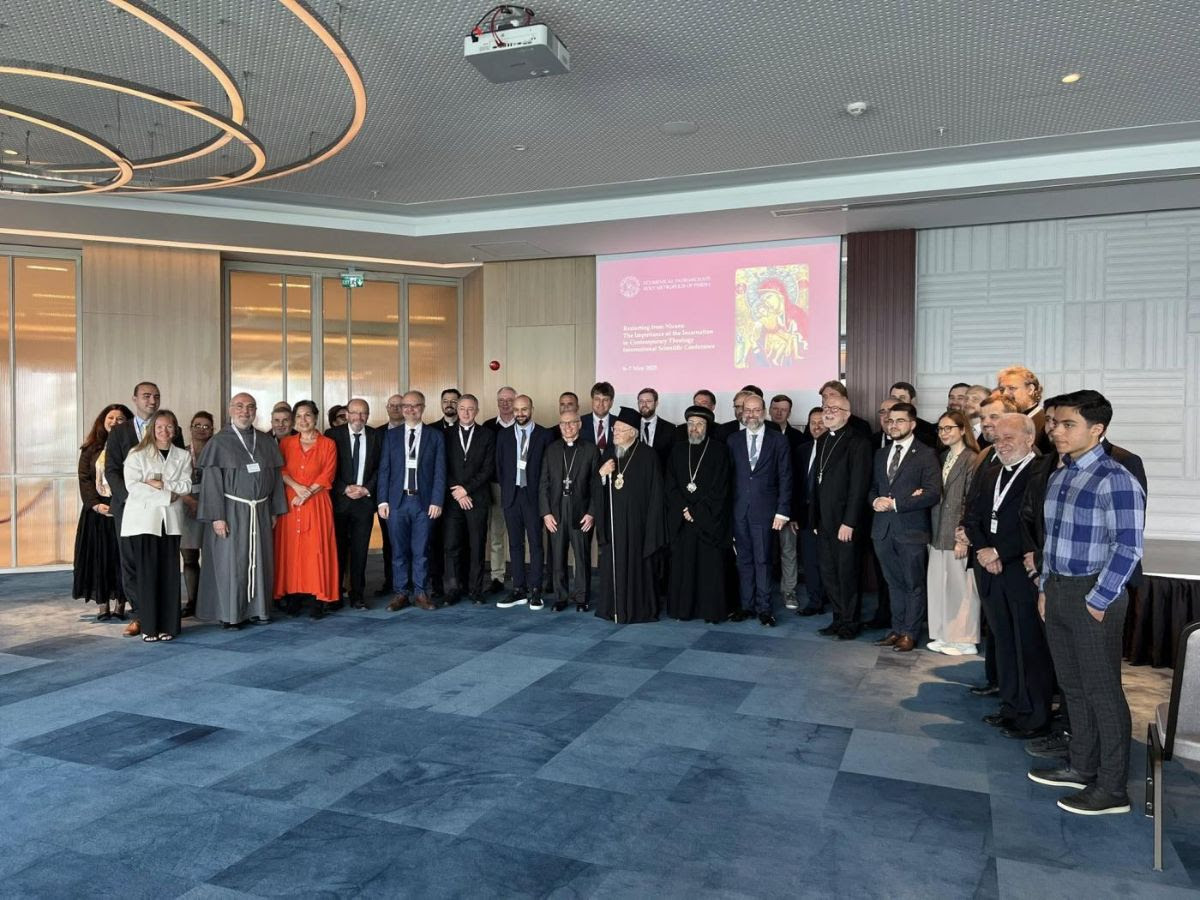
Participants of the conference “Restarting from Nicaea: The Importance of the Incarnation in Contemporary Theology” in Antalya. Photo: Metropolis of Pisidia
21 May 2025

On the occasion of the 1700th anniversary of the First Ecumenical Council of Nicaea, the Holy Metropolis of Pisidia organized, in collaboration and with the support of Corpus International Association, in Antalya on 6-7 May, an international scientific conference entitled: “Restarting from Nicaea: The Importance of the Incarnation in Contemporary Theology.”

The conference began with the opening address of His All-Holiness Ecumenical Patriarch Bartholomew, who emphasized on the one hand that “speaking about God – theologizing – is a risky business” and reminded on the other that “the spirit of Nicaea must once again ignite the Christian message.”

The conference brought together 25 speakers from 11 different countries, scholars and pastors, eminent professors and young researchers, coming from different Christian churches, whose communications were of a high scientific level. 

Participants discussed the importance and relevance of God’s incarnation for contemporary Christian theology in eight thematic panels.

The conference also emphasised the necessity of expanding the theological dialogue between the Orthodox church and the Roman Catholic Church, as well as with other Christian churches, recalling that the Council of Nicaea was a council of Christian unity.

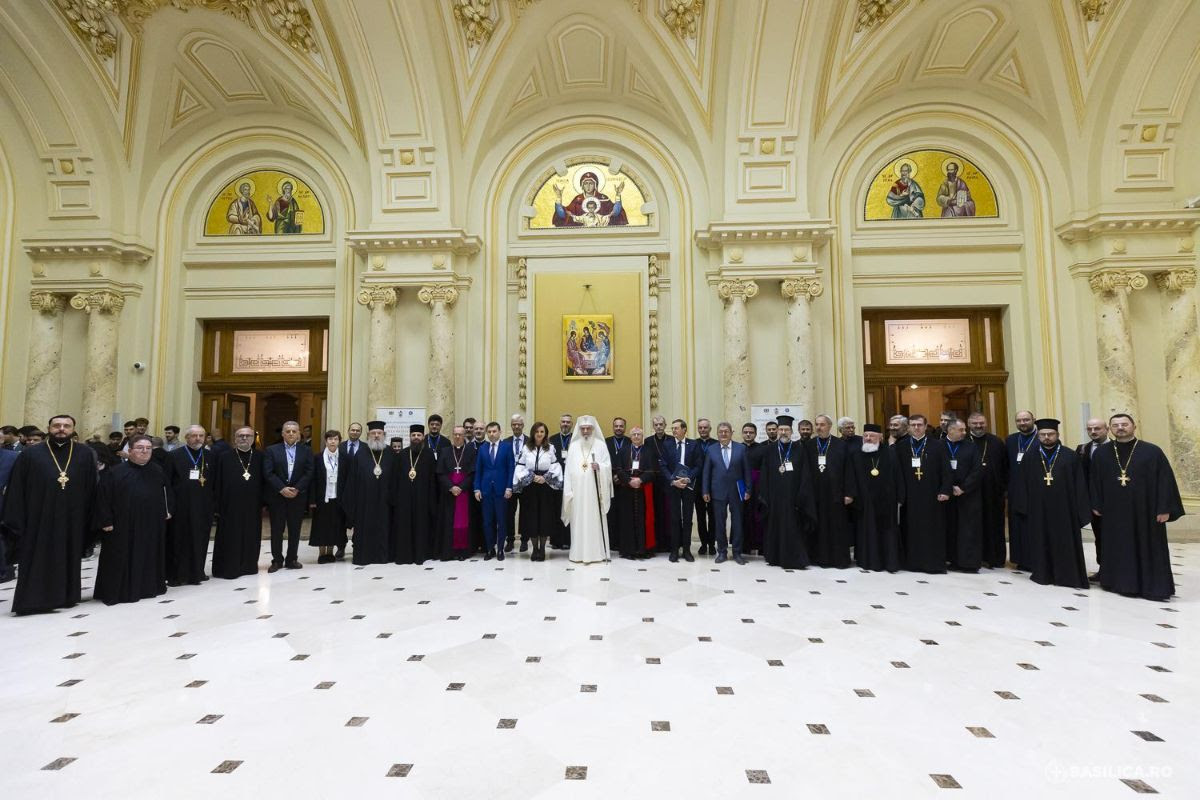
From 14-17 May, an international symposium on Nicaea took place in Bucharest, organized by the Romanian Orthodox Church and the Faculty of Orthodox Theology "Justinian the Patriarch” University of Bucharest.  

H.E. Metropolitan Prof. Dr Job (Getcha), Metropolitan of Pisidia, and vice moderator of the WCC Commission on Faith and Order, spoke at both conferences. At the Bucharest conference, he reflected on “The Council of Nicaea and the Common Date of Pascha.” 

The metropolitan noted that the purpose of the Nicaea council was to consolidate the unity of the church not only in matters of dogma, but also by introducing a common date for the Paschal celebration.

“Thus, at the Council of Nicaea, it was agreed to celebrate Easter on the Sunday after the full moon following the vernal equinox,” he said. “Rome used an 84-year cycle to determine the date of the full moon, while Alexandria used a more precise 19-year cycle.”

The Council of Nicaea was a council on the unity of the church, the metropolitan concluded. “The spirit of the decision of the Council of Nicaea can still inspire and enlighten Christians today who unfortunately still cannot celebrate Easter together,” he said. “The encyclical of Patriarch Joachim III of 1902 and the encyclical of the Ecumenical Patriarchate of 1920 had launched an appeal to the Churches to resolve this divergence.”

At the Patriarchal Palace on Wednesday, May 14, 2025, the opening of the International Symposium of Theology took place: The First Ecumenical Council of Nicaea (325): The Orthodox Faith – the Foundation of the Church's Unity. Photo: Basilica.ro/Mircea Florescu
See more
The World Council of Churches on Facebook
The World Council of Churches on Twitter
The World Council of Churches on Instagram
The World Council of Churches on YouTube
World Council of Churches on SoundCloud
The World Council of Churches' website
The World Council of Churches promotes Christian unity in faith, witness and service for a just and peaceful world. An ecumenical fellowship of churches founded in 1948, today the WCC brings together 352 Protestant, Orthodox, Anglican and other churches representing more than 580 million Christians in over 120 countries, and works cooperatively with the Roman Catholic Church. The WCC general secretary is Rev. Prof. Dr Jerry Pillay from the Uniting Presbyterian Church in Southern Africa.

Media contact: +41 79 507 6363; www.oikoumene.org/press
Our visiting address is:
World Council of Churches
Chemin du Pommier 42
Kyoto Building
Le Grand-Saconnex CH-1218
Switzerland

Thursday, December 5, 2024

WCC FEATURE: Netherlands churches plan modern twists to commemorate Nicaea Council

Churches in the Netherlands are ready to commemorate an ancient Ecumenical Council in very modern ways. 

The Nieuwe Kerk, where the World Council of Churches was founded in 1948, Photo: Albin Hillert/WCC
5 December 2024

With the publication of a new brochure Seventeen Centuries, Council of Nicaea: Deliberating Together, Believing Together, Celebrating Together,” the National Council of Churches in the Netherlands has put into the hands of churchgoers a readable explanation of why they should care about an Ecumenical Council that happened 1,700 years ago.

Rev. Coen Wessel, general secretary of the National Council of Churches in the Netherlands, outlined the many ways in which churches will draw a sense of unity during 2025.

We will start the year of remembrance with the Week of Prayer for Christian Unity, which also marks the anniversary of the Ecumenical Council,” he said. From the World Council of Churches, we received beautiful material for this Week of Prayer, but for our Dutch situation we really needed some editing so that the material would become slightly more accessible to most churchgoers.”

Last summer, a team comprised mainly of young women edited the material. We also created a special prayer booklet for children,” he said. In the Netherlands, we have been working together with the Dutch branch of the World Evangelical Alliance and with the umbrella of migrant churches for the Week of Prayer for several years.”

Wessel has since seen a lot of local ecumenical cooperation and a growing interest in the Week of Prayer.

We made a special pulpit message for local churches that is read out in church services at the beginning of the Week of Prayer (19 January),” he explained. We also re-translated the text of the Nicene Creed and a composer created a new tune.”

The National Council of Churches in the Netherlands is also planning  an Ecumenical Lecture on 16 May 2025 in Utrecht by Rev. Dr Susan Durber, WCC president from Europe, as well as a national ecumenical church service on 14 June 2025 in Gouda.

Wessel is foreseeing special meetings related to the anniversary of the Ecumenical Council. I also hope that Oriental Orthodox churches, with whom we share the Nicene Creed, will become more prominent among the larger churches of the Netherlands,” he said. I hope that local churches will organise meals where they invite all the churches in their hometowns, including churches that do not yet work within an ecumenical context.”

Wessel has even consulted with television producers about a television programme on Nicaea. They looked a bit dubious at first, until I told them about Saint Nicholas,” he said. According to a legend, Saint Nicholas attended the Council of Nicaea and got so wound up about Arius that he slapped him in his face.”

He added that Saint Nicholas was punished, of course—and the legend gave television producers in the Netherlands an entry point to tell a story about Nicaea before a large audience. Saint Nicholas is the best-known saint in the Netherlands and he fulfils the role that Santa Claus has in the Anglo-Saxon world,” explained Wessel.

Theological baggage? Drop it

The author of the new brochure, Prof. Dr Peter Nissen, held the average interested churchgoer in mind: with a high school education, but without theological baggage.

This is a challenge for me, as I have taught church history and ecumenics in an academic context all my life,” said Nissen, who is a Catholic theologian and church historian who has been a professor of church history, spirituality studies, and ecumenical studies at Radboud University in Nijmegen, Netherlands. He also chairs the theological committee of the Council of Churches in the Netherlands.

Since my retirement—and even before that—I also lecture a lot for parishes and church congregations, so I do know the audience,” he said.

Nissen's intention was to write an approachable introduction to what happened 17 centuries ago, paying particular attention to the everyday aspects: what was the position of Christianity in society at the time, how did such a council work, and what did ordinary believers notice?

I hope churchgoers will especially realise that that church meeting, so many centuries ago, was about things that are still important to us as a church community today: talking to each other when divisions threaten, putting into words together what unites us as people of faith, and celebrating together that our faith is an Easter faith,” he said. For these were the three key issues of the Council of Nicaea: the form of deliberation in an Ecumenical Council, the formulation of a unifying creed, and finding a shared date for the celebration of Easter.”

Nissen did not want to tire people with theological quibbles about the nature of Christ, as he believes that is more for academic theologians anyway. For ordinary believers in our time of division and polarisation, it is especially important to realise that it was there in Nicaea that representatives of faith communities from all corners of the world came together for the first time,” he said. There it became visible that the Christian church is a global church.”

Nissen believes its important a realisation be deepened locally: “We belong to a greater whole, a church of all ages and from all directions,” he said.

The brochure includes discussion questions designed for circles of people—from a Catholic parish, Protestant congregation, ecumenical discussion group, house of learning, even a church choir. The best form to talk about them is according to the method practised in the Roman Catholic Church worldwide in the last three years as part of the synodal process: first listen carefully to each other before entering into discussion, suspend one's own opinions for a while, allow space for silence, and be open to what you can learn from the others in the conversation,” suggested Nissen. Then perhaps we can understand what the Spirit wants to say to us through the voice of others and as believers we can grow towards greater unity and deeper connection.”


Nicaea 2025

"WCC shares insights on Nicaea with Partners in Global Mission" (WCC news release, 3 December 2024)

"Dr Andrej Jeftić reflects on expectations for Ecumenical Year 2025" (WCC interview, 14 November 2024)

See more
The World Council of Churches on Twitter
The World Council of Churches on Facebook
The World Council of Churches' website
The World Council of Churches on Instagram
The World Council of Churches on YouTube
SoundCloud
The World Council of Churches promotes Christian unity in faith, witness and service for a just and peaceful world. An ecumenical fellowship of churches founded in 1948, today the WCC brings together 352 Protestant, Orthodox, Anglican and other churches representing more than 580 million Christians in over 120 countries, and works cooperatively with the Roman Catholic Church. The WCC general secretary is Rev. Prof. Dr Jerry Pillay from the Uniting Presbyterian Church in Southern Africa. 

Media contact: +41 79 507 6363; www.oikoumene.org/press
Our visiting address is:
World Council of Churches
Chemin du Pommier 42
Kyoto Building
Le Grand-Saconnex CH-1218
Switzerland

Monday, November 11, 2024

WCC news: International conference examines significance of the Council of Nicaea for the ecumenical movement today

An international conference organized by the World Council of Churches (WCC) has marked the beginning of a year of activities commemorating the 1700th anniversary of the First Ecumenical Council of Nicaea and other significant anniversaries in 2025.

“Towards Nicaea 2025: Exploring the Council’s Ecumenical Significance Today” was held at the Ecumenical Institute at Bossey. Photo: Gregoire de Fombelle/WCC

8 November 2024

By Stephen G. Brown*

Titled “Towards Nicaea 2025: Exploring the Council’s Ecumenical Significance Today,” the 5-7 November conference was held at the Ecumenical Institute at Bossey, a centre for ecumenical formation, education, and study near Geneva.

“The deep concern at Nicaea to be faithful to the unity of God and to the unifying love of God is still a powerful and inspiring witness,” said Rev. Dr Susan Durber, WCC president from Europe and former moderator of the WCC’s Commission on Faith and Order, in a keynote address. 

The Council of Nicaea in 325 CE was the first gathering of bishops representing the whole of Christendom, who met under the patronage of the Roman Emperor Constantine to seek consensus on the central meaning of Christian belief. 

“Their grappling for language to speak of a unity that is rooted in the unity of God and of God’s actions can still inspire us to deepen our own visions and recalibrate our own ecumenism,” she said.

Jointly hosted by the Ecumenical Institute at Bossey and the WCC Commission on Faith and Order, the conference gathered more than 130 participants online and in person - academics, church representatives, pastors, as well as the graduate students at the Ecumenical Institute.

With six keynote addresses, and more than 40 papers that were presented, participants addressed issues such as the contribution of Nicaea to ecumenical dialogue, its relationship to interfaith dialogue, the role of women at the Council of Nicaea, reimagining the Nicene Creed from the perspective of gender justice, and the relationship between Christian faith and empire.

The Council of Nicaea led to the later adoption of the Nicene Creed, which is still recited in churches today as an affirmation of faith in the triune God, and participants reflected on the significance of the Council of Nicaea and the Nicene Creed for Christian unity today.

In his comments at the conclusion of the three-day conference, Rev. Prof. Dr Benjamin Simon, said that the conference had helped demonstrate hope that the Nicene Creed offers possibilities for the liberation of marginalized and oppressed people, to work for integration and not segregation. Simon is dean of the Ecumenical Institute at Bossey and director of the WCC Commission on Ecumenical Education and Formation.

One of the outcomes of the council, as noted by Dr Johannes Oeldemann, a Roman Catholic theologian from Germany, in his keynote address, was setting a common date for Easter for all churches, rather than churches celebrating the resurrection of Jesus on different dates.

However, Eastern and Western Christianity now calculate the date of Easter differently, and their celebrations often do not coincide, although all churches will celebrate Easter on the same day in 2025.

“The coming decade offers a good opportunity to dedicate our ecumenical efforts to the complex challenge of finding a common Easter date, because the calendar will allow to celebrate Easter together every three years,” said Oeldemann, director of the Johann-Adam-Moehler-Institute for Ecumenism in Paderborn.

Not least because of the involvement of the Emperor Constantine, the Council of Nicaea marked the transition from Christians being a persecuted minority to being recognized by the Roman state.

However, the primary concern of the emperor at the Council of Nicaea was not theological but political, to establish a unified Christianity that would contribute to the unity of the empire, argued Rev. Dr Kathleen M. Griffin, professor of church history in Buenos Aires, Argentina. 

The legacy that remained for centuries within Western Christianity was this marriage “between creed, sword, and empire that occurred at the Council of Nicaea,” she said, with particular reference to South America, “converted to Christianity at sword point.”

Rev. Prof. Dr Benjamin Simon, dean of the Ecumenical Institute at Bossey and director of the WCC Commission on Ecumenical Education and Formation, and Dr Andrej Jeftic, director of the WCC Faith and Order Commission. Photo: Gregoire de Fombelle/WCC

In his keynote address, Prof. Dr Charidimos Koutris of the Aristotle University of Thessaloniki suggested that a renewed emphasis on the human nature of Jesus Christ as discussed at Nicaea could offer a solid basis for further ecumenical collaboration, and bringing together people of every faith.

The question as to what extent a creed developed in fourth-century Europe is able to be appropriated in different languages, histories, cultures, and traditions, was at the centre of the reflections of Prof. Dr Wong Wai Ching Angela of the Chinese University of Hong Kong. 

“If Christianity is to change its identity from being a resident alien to a local in a non-western world, such as Asia, it must become incarnate in the life and thought of the local context and culture,” Wong stated.

“If we accept that Nicene Creed was developed out of a particular context with a particular cultural environment,” she said, “it should be facilitating a continued conversation between performing symbolic acts of Church unity and a conscious integration of the diverse practices of the various churches in different cultures.”

The colonial and decolonial tensions in the processes and outcomes of the Council of Nicaea were explored by Prof. Dr Masiiwa Ragies Gunda in his address, in which he underlined the reality of the existence of coloniality in the post-Nicene Christian communities, “especially when combined with forms of Euro-Christianities.”

However, the outcomes of the Council of Nicaea also included decolonial impulses, even if unintended, and all Christian communities need to engage in “an intentional reappraisal of the Nicene Creed for a decolonizing ecumenical movement,” said Gunda, WCC programme executive for overcoming racism, xenophobia, and related discrimination. 

The culmination of the WCC’s activities in what it is calling the Ecumenical Year 2025 will be the Sixth World Conference on Faith and Order in October 2025, gathering near Alexandria in Egypt on the theme “Where now for visible unity?” 

Dr Stephen G. Brown is the editor of the WCC journal, The Ecumenical Review.

More information about “Towards Nicaea 2025: Exploring the Council’s Ecumenical Significance Today”

Photo Gallery

More information about the WCC and Nicaea 2025

Nicaea 2025 Bossey International Conference opens with reflections on unity (WCC news release, 5 November 2024)

Why did the emperor Constantine convoke the Council in Nicaea? (WCC feature story, 7 November 2024)

See more
The World Council of Churches on Facebook
The World Council of Churches on Twitter
The World Council of Churches on Instagram
The World Council of Churches on YouTube
World Council of Churches on SoundCloud
The World Council of Churches' website
The World Council of Churches promotes Christian unity in faith, witness and service for a just and peaceful world. An ecumenical fellowship of churches founded in 1948, today the WCC brings together 352 Protestant, Orthodox, Anglican and other churches representing more than 580 million Christians in over 120 countries, and works cooperatively with the Roman Catholic Church. The WCC general secretary is Rev. Prof. Dr Jerry Pillay from the Uniting Presbyterian Church in Southern Africa.

Media contact: +41 79 507 6363; www.oikoumene.org/press
Our visiting address is:
World Council of Churches
Chemin du Pommier 42
Kyoto Building
Le Grand-Saconnex CH-1218
Switzerland