Showing posts with label Ecumenical Council in Nicaea. Show all posts

Monday, December 22, 2025

WCC NEWS - Nicaea workshop highlights depth, diversity of churches in Egypt and beyond

Bringing together representatives from the churches of Egypt and the wider region, workshop Nicaea 325–2025: Intra-Christian and Interreligious Dialogue on a Pilgrimage Towards Unity” took place during the World Council of Churches (WCC) Sixth World Conference on Faith and Order in Egypt, held in October.

Photo: WCC
22 December 2025

Workshop was organised by the WCC Interreligious Dialogue and Cooperation programme, demonstrating the significant role churches continue to play in building bridges between East and West, the Middle East and Africa.

The session was moderated by Dr Samir Morcos, representing the Coptic Orthodox Patriarchate of Alexandria and underscoring the significance of the Egyptian Christian presence as a bridge of dialogue, particularly through the churchs longstanding communication with Al-Azhar and its participation in national interfaith encounters. Morcos guided a conversation focused on the contemporary relevance of Nicaea as a symbol of unity and as a point of departure for a renewed ecumenical and interreligious vision.

Rev. Refat Fathy, general secretary of the Synod of the Nile of the Evangelical Presbyterian Church in Egypt, together with Rev. Eid Beshara, highlighted the churchs ongoing efforts to promote peace and social cohesion, emphasizing the sustained communication channels and locally rooted cooperation initiatives developed with Muslim partners in communities across the country. They noted that these initiatives include joint neighbourhood committees, shared educational and social programmes, and regular platforms for civic dialogue, all of which contribute to strengthening trust and fostering a culture of mutual respect within Egyptian society.

Representing the Episcopal and Anglican Province of Alexandria, Seleem Wassef, the diocesan interfaith coordinator, presented the provinces ongoing efforts to promote peaceful interreligious cooperation, highlighting its regular dialogue with Muslim leaders, joint community-service projects in mixed neighbourhoods, and participation in national platforms addressing social cohesion and religious literacy. Wassef also referred to the provinces educational and youth-focused programmes, which bring together Christian and Muslim students to cultivate mutual understanding as a foundation for long-term societal harmony.

The Greek Orthodox Patriarchate of Alexandria and All Africa was represented by Fr Dr Evangelos Thiani, serving the African Orthodox Church of Kenya within the Orthodox Archdiocese of Nairobi. He highlighted the pastoral challenges of East African Orthodoxy within Kenyas culturally diverse context, marked by strong oral tradition, ethnic plurality, and community-based social structures that shape interreligious relations. He noted the churchs involvement in community mediation and various local initiatives where Christians, Muslims, and Indigenous tribes collaborate in addressing shared social needs. His contribution underscored the Patriarchates longstanding commitment to dialogue and reconciliation across the African continent.

Adding an international dimension, Andrew James Boyd, senior programme manager of the KAICIID Fellows, underscored the global relevance of structured interreligious cooperation and emphasized the importance of building sustainable networks capable of supporting coordinated action. He highlighted the Fellows Programme, which trains religious and community leaders and equips them to foster mutual respect and social-cohesion initiatives in their local contexts.

Overall, the workshop highlighted the depth and diversity of the churches of Egypt and Africa, whose presence at a significant geopolitical crossroads offers enduring examples of coexistence and ecumenical vision. Participants reflected on how intra-Christian collaboration can support wider interreligious cooperation and contribute to the prevalence of peace on earth, echoing the Gospel call for peace on earth and goodwill among all people.”
 

See more
The World Council of Churches on Facebook
The World Council of Churches on Twitter
The World Council of Churches on Instagram
The World Council of Churches on YouTube
World Council of Churches on SoundCloud
The World Council of Churches' website
The World Council of Churches promotes Christian unity in faith, witness and service for a just and peaceful world. An ecumenical fellowship of churches founded in 1948, today the WCC brings together 356 Protestant, Orthodox, Anglican and other churches representing more than 580 million Christians in over 120 countries, and works cooperatively with the Roman Catholic Church. The WCC general secretary is Rev. Prof. Dr Jerry Pillay from the Uniting Presbyterian Church in Southern Africa.

Media contact: +41 79 507 6363; www.oikoumene.org/press
Our visiting address is:
World Council of Churches
Chemin du Pommier 42
Kyoto Building
Le Grand-Saconnex CH-1218
Switzerland

Monday, May 26, 2025

WCC NEWS: Message from Life and Work conference calls for renewed unity

A message from the Life and Work conference held in Athens made strong connections to the gathering’s historic counterpart in Stockholm in 1925 and, even further back, to the first Ecumenical Council in Nicaea 1700 years ago.
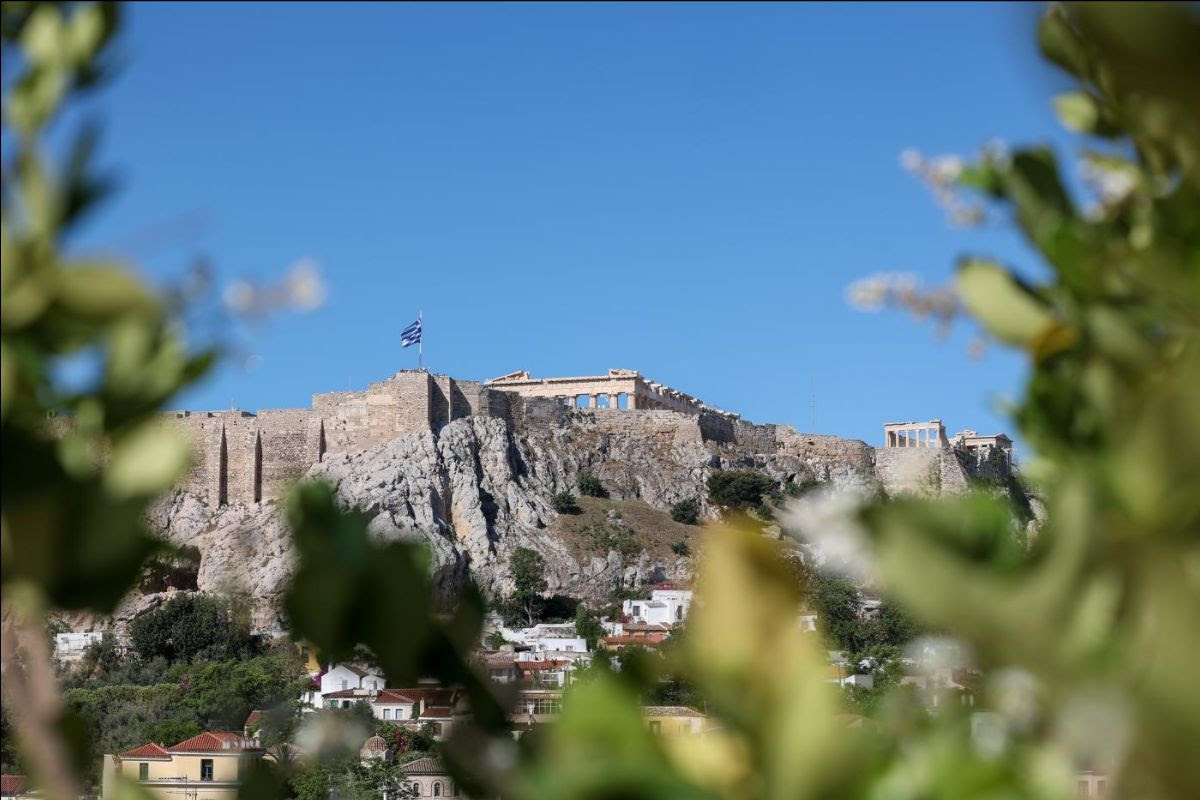
View of the Acropolis of Athens, an ancient citadel located on a rocky hill above the city of Athens, Greece. Photo: Ivars Kupcis/WCC
22 May 2025

“During these days together in Athens, our meeting has taken place against the background of increasingly desperate news of the appalling violence and suffering inflicted on the people of Gaza by the government and military of Israel in flagrant violation of international law and morality, accompanied by attacks on southern Lebanon in violation of its national sovereignty, and by threats of full-scale ethnic cleansing of the Palestinian population of Gaza,” reads the message. 

“We recalled also the ongoing illegal Russian invasion of Ukraine, the terrible unconstrained civil war in Sudan, the brutal military dictatorship in Myanmar, the ongoing occupation of northern Cyprus as well as of the Palestinian territories, the emptying of Artsakh/Nagorno-Karabakh of its Indigenous ethnic Armenian inhabitants, the proliferation of conflicts and conflict-risks elsewhere, and increased militarization in many contexts, as well as the global displacement crisis, spiralling economic inequality, and the accelerating climate crisis.”

The message also noted that those gathered saw demonstrations in the streets of Athens commemorating the 1915 genocides of Greeks, Syriacs, and Armenians, reminding them of the persistence of human cruelty, violence, and greed.

The conference message recognizes the Life and Work conference in Stockholm as the foundation stone upon which the ecumenical Life and Work movement – and the World Council of Churches Commission of the Churches on International affairs itself – was established. “This centenary occasion is a salutary opportunity to reflect on this pivotal movement in ecumenical history and on the rich heritage of ecumenical social ethics and action,” the message reads. “Participants in the Stockholm Conference saw hope in the development of international law and international institutions to mitigate and resolve such challenges.”

However, the message notes, the United Nations – and the commitment to international cooperation, respect for international law, and trust between nations and communities – now face a major crisis.

“In such a context, we propose to reclaim, rehabilitate and re-assert the concept of the ‘Welfare State,’ in its origins a theological concept, seeking to define the nature of the responsibility of the State towards all of its citizens,” reads the message. “The witness of the ecumenical movement for unity amidst division is once again an urgent calling in a world that is on an accelerating trajectory of fragmentation, confrontation and conflict, and away from justice, solidarity, and peace, one hundred years after the Stockholm Conference.”

Read the Message of the CCIA Life and Work Centenary Consultation in Athens

A dip into church history: from Nicaea, to Stockholm, to today’s challenging world (WCC news release, 21 May 2025)

WCC international affairs conference: “The time for God’s peace is now” (WCC news release, 20 May 2025)

Life and Work conference opens with call for “no discrimination in love among fellow human beings” (WCC news release, 19 May 2025)

Photo gallery: CCIA Life and Work Centenary Consultation

Video recordings of the CCIA Life and Work conference in Athens

See more
The World Council of Churches on Facebook
The World Council of Churches on Twitter
The World Council of Churches on Instagram
The World Council of Churches on YouTube
World Council of Churches on SoundCloud
The World Council of Churches' website
The World Council of Churches promotes Christian unity in faith, witness and service for a just and peaceful world. An ecumenical fellowship of churches founded in 1948, today the WCC brings together 352 Protestant, Orthodox, Anglican and other churches representing more than 580 million Christians in over 120 countries, and works cooperatively with the Roman Catholic Church. The WCC general secretary is Rev. Prof. Dr Jerry Pillay from the Uniting Presbyterian Church in Southern Africa.

Media contact: +41 79 507 6363; www.oikoumene.org/press
Our visiting address is:
World Council of Churches
Chemin du Pommier 42
Kyoto Building
Le Grand-Saconnex CH-1218
Switzerland